
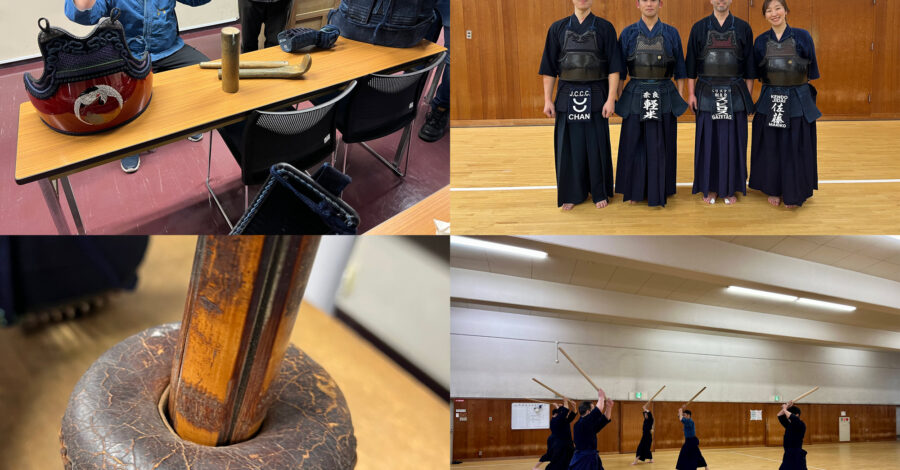
From Thursday, February 19 to Monday, February 23, 2026, a Japanese Cultural Tourism Program Centered on Kendo was held as part of the 100th Anniversary Project of Tenri University.
The program was conceived and organized by Associate Professor Yoshitaka Karukome of the Faculty of Budo and Sport Studies at Tenri University, whose research focuses on Jikishinkage-ryu, one of Japan’s traditional schools of swordsmanship.
“There are many exceptional cultural assets in the area surrounding Tenri University. I thought that by creating a cultural tourism program centered on Kendo, we could share their value and appeal with a wider audience,” Professor Karukome explained of the inspiration behind the project.
Over the course of the five-day program of lectures and hands-on experiences, participants explored the history of Jikishinkage-ryu, Professor Karukome’s area of expertise, while tracing how its philosophy and techniques have been passed down and incorporated into modern Kendo.
The program also extended beyond Jikishinkage-ryu, covering the historical development of the Shinai and Kendo equipment, mythological elements, and connections with other martial arts such as Sojutsu (spear techniques). Through these lectures and experiences, participants were able to gain a firsthand understanding of how Kendo has taken shape within multiple layers of Japanese history and culture.
In this series of reports, we will introduce the overall scope of this cultural tourism program and take a closer look at each of its individual activities over several installments.
Day 1, Morning: Exploring the Origins of Kendo through Jikishinkage-ryu
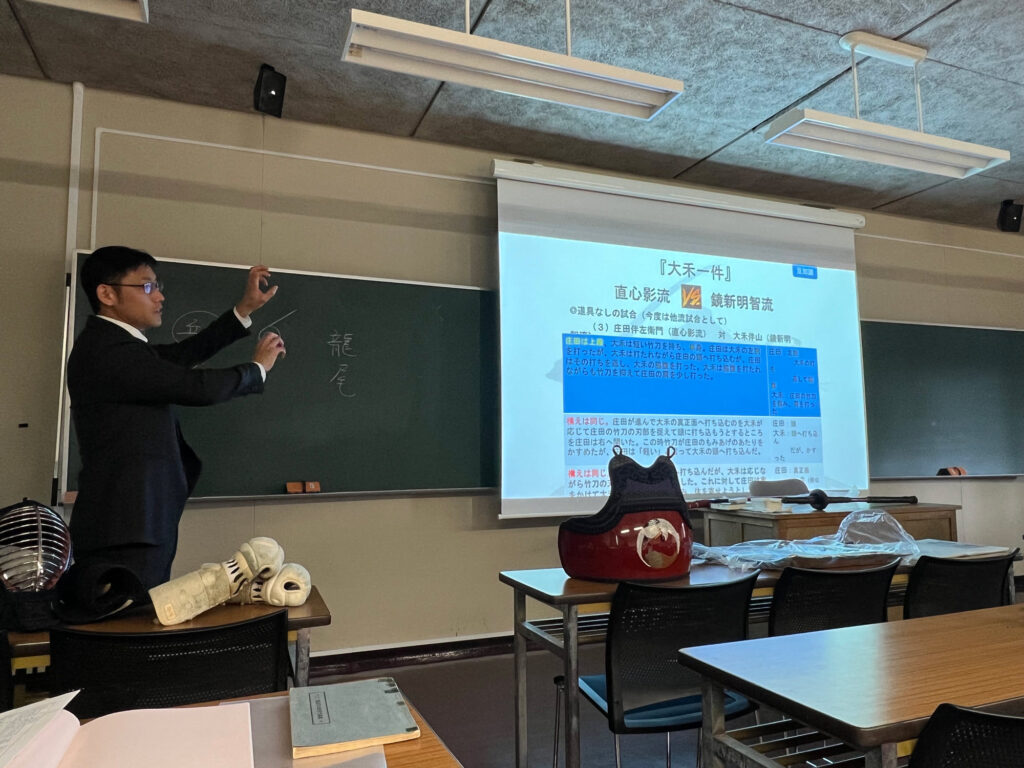
On the morning of the first day, participants learned about the development and evolution of the Shinai and Kendo equipment, with a particular focus on Jikishinkage-ryu, a traditional school of swordsmanship that had a significant influence on the development of modern Kendo.
When we hear the word Kendo, many of us naturally think of Keiko. For many practitioners, Kendo is inseparable from regular Keiko and the continuous practice it entails.
In modern Kendo, Keiko generally forms the core of training, with time set aside for Kendo Kata as needed. Of course, some Dojo may practice Kata at every training session, but overall, contemporary Kendo can be described as having a Keiko-centered approach.
Historically, however, in traditional schools of swordsmanship, techniques were transmitted through Kata.
How an Era of Peace Gave Rise to a New Form of Keiko
In the early Edo period, there were still many samurai who had survived the Sengoku period. Having experienced actual combat themselves, they could bring a strong sense of realism to the practice of Kata.
By the middle of the Edo period, however, generations of peace meant that most samurai had never experienced combat. As a result, Kata gradually became more formalized and increasingly detached from the realities of actual fighting.
Concerned about this development, some dedicated swordsmen began searching for a different way to train. This led to the emergence of Shinai Uchikomi Keiko, a form of practice in which practitioners wore protective equipment and used Shinai to strike one another freely.
The Shinai thus came to be used as a training weapon that allowed practitioners to exchange strikes with an opponent in relative safety.
Popular Techniques Shaped Both Equipment and Swordsmanship
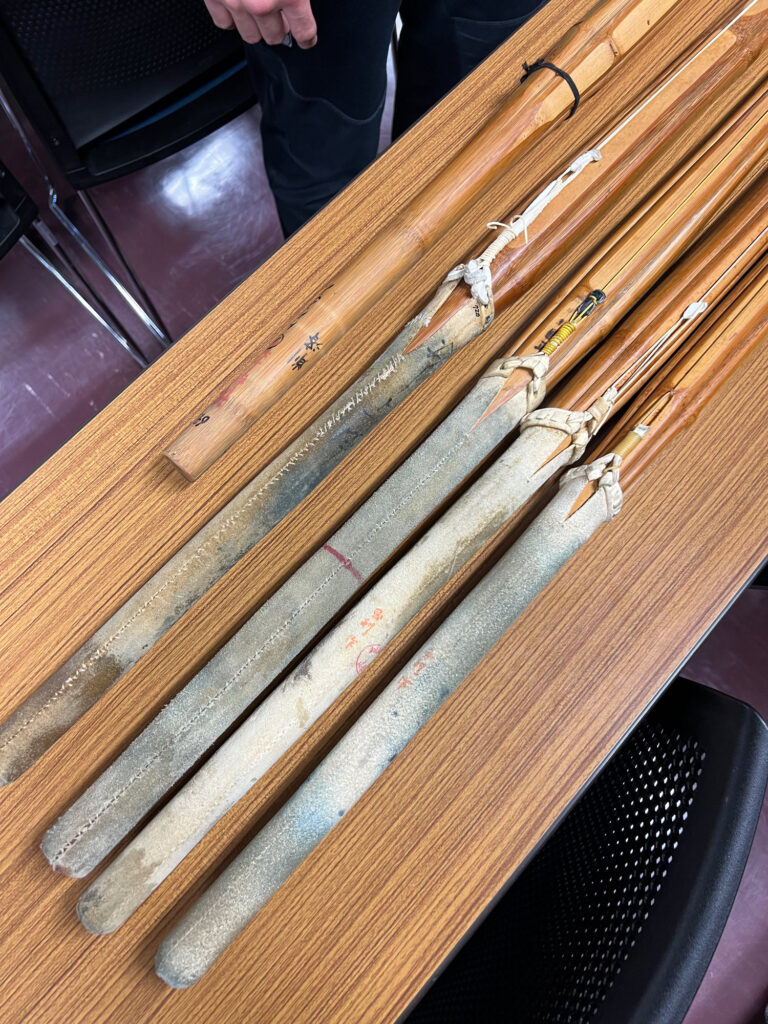
The form of the Shinai underwent a number of changes before reaching the length and design commonly used today. Early Shinai included the Fukuro Shinai, which was made by splitting the end of a single piece of bamboo into several sections and covering it with a leather sleeve.
During the lecture on the first day of the tour, Professor Taichi Sakamoto of Chubu Gakuin University brought several Shinai resembling these earlier forms for participants to examine. Among them were Shinai measuring four shaku and two sun in length, as well as noticeably thicker examples, giving them a very different appearance from modern Shinai.
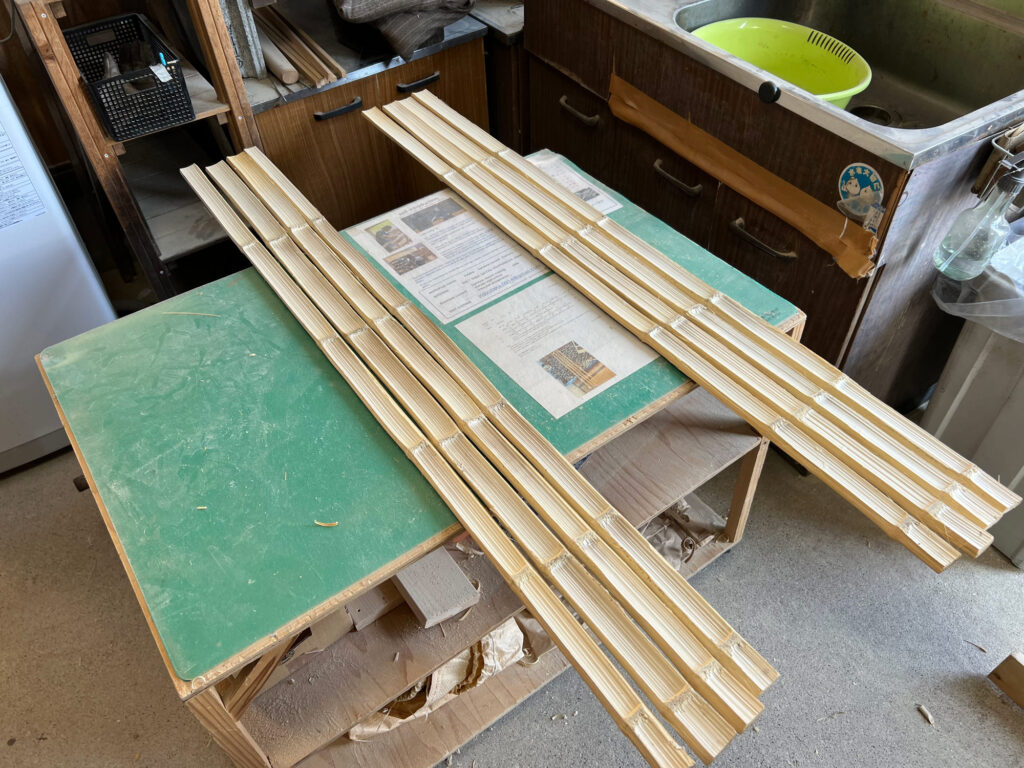
The Shinai we use today is constructed from four bamboo slats. This type of Shinai is said to have been developed during the Edo period by Oishi Susumu of the Yanagawa Domain.
Oishi Susumu was a remarkably tall man for his time, standing approximately 180 cm, and was known for his one-handed Tsuki using an exceptionally long Shinai measuring around 160 cm. He is said to have challenged many of Edo’s renowned swordsmen in matches between different schools and achieved victory after victory.
At the time, the average height was around 150 cm. The sight of such a tall swordsman delivering one-handed Tsuki with an unusually long Shinai must have had a tremendous impact on the swordsmen of Edo. As a result, long Shinai and Tsuki techniques became extremely popular in Edo.
However, frequent use of Tsuki placed considerable stress on the Fukuro Shinai, causing it to break easily. It is believed that this led Oishi to develop the more durable four-slat Shinai.
Ayumi-ashi was also commonly used in swordsmanship at the time. With a long Shinai, however, using Ayumi-ashi could cause the tip of the Shinai to become unstable. Okuri-ashi therefore came to be used to maintain greater stability of the sword tip.
During the lecture, this was described as “a classic example of how the popularity of a particular technique can drive changes in both equipment and technique.”
It made me think that the same principle may still apply to Kendo today.
How Shinai Have Evolved to Meet the Needs of Practitioners and Techniques
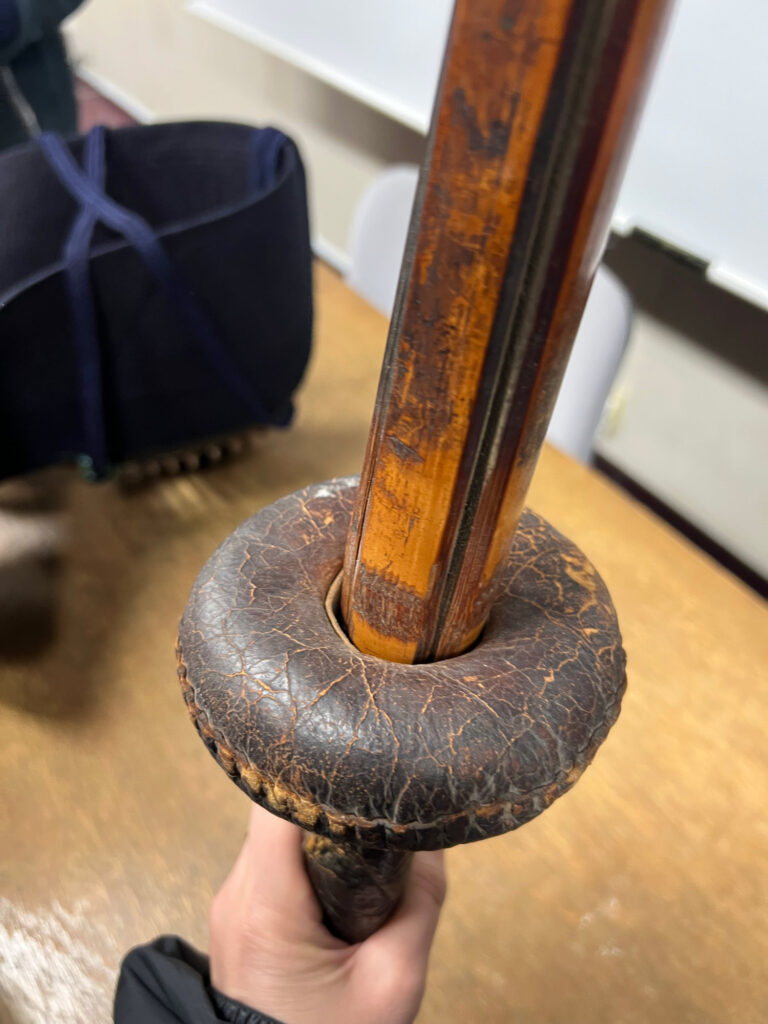
After the lecture, Professor Sakamoto showed us a variety of Shinai in different shapes and designs. Even the Shinai alone has undergone many changes over time, and among the examples was one specifically designed for non-Japanese practitioners.
Seeing these different Shinai made us realize how equipment has continued to evolve in response to the needs of both the people who use it and the techniques they practice.
Professor Karukome explained that he designed the program in this hands-on format because he wanted the international Kendo practitioners taking part in the tour to see, touch, and experience these things for themselves.
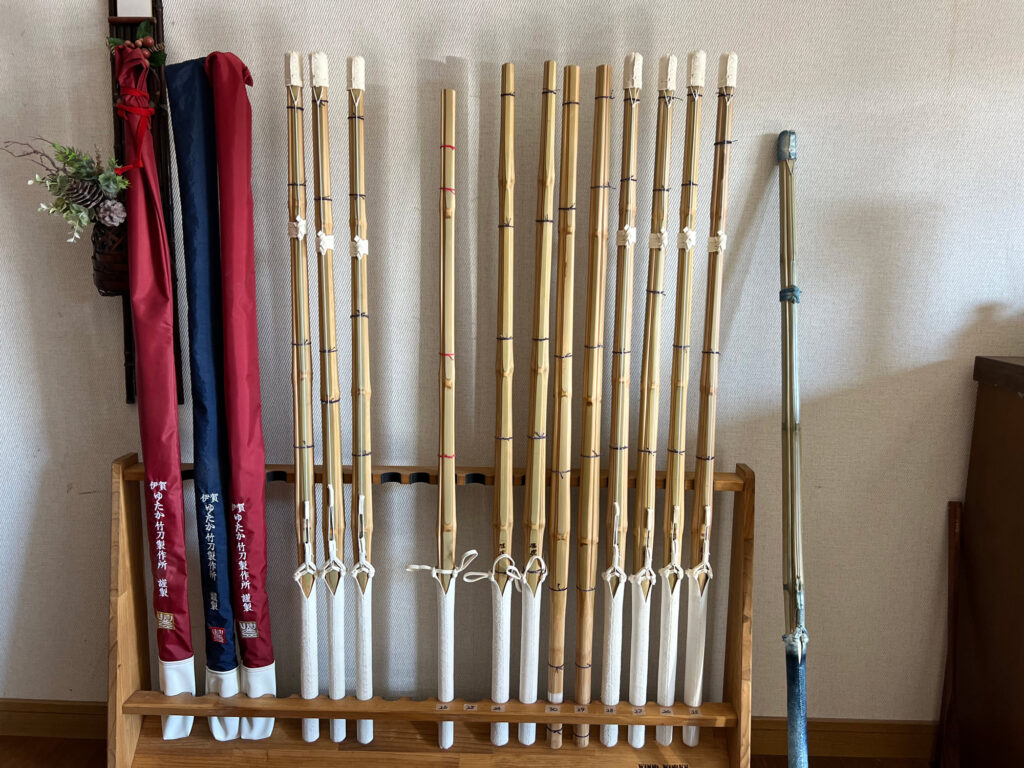
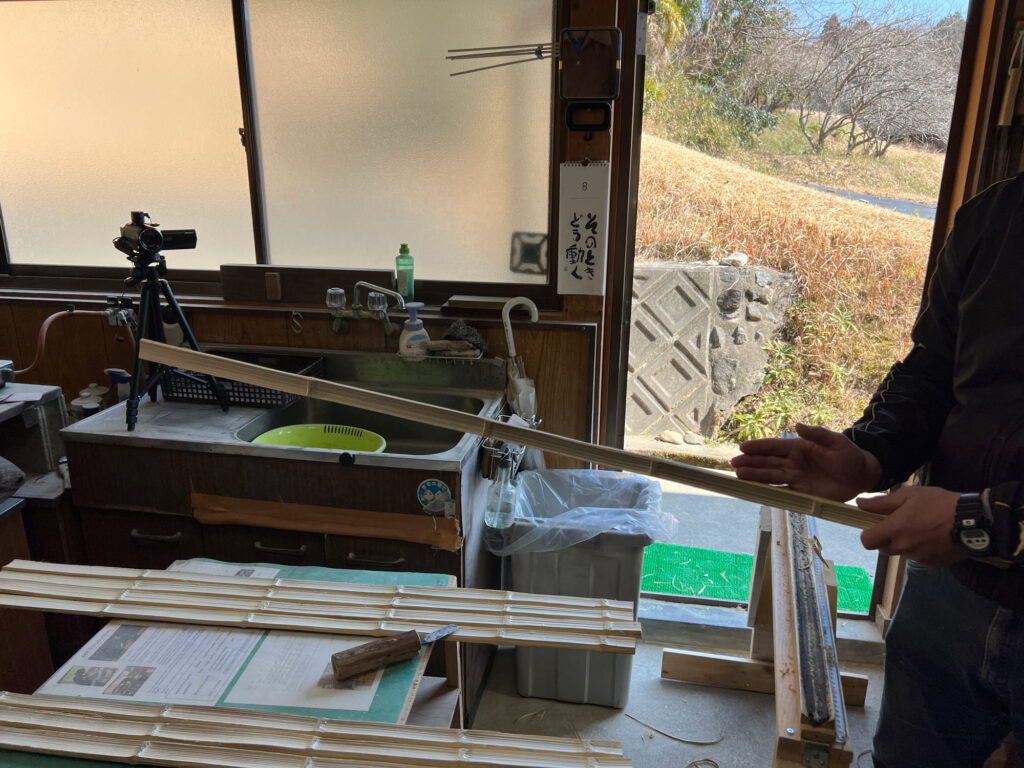
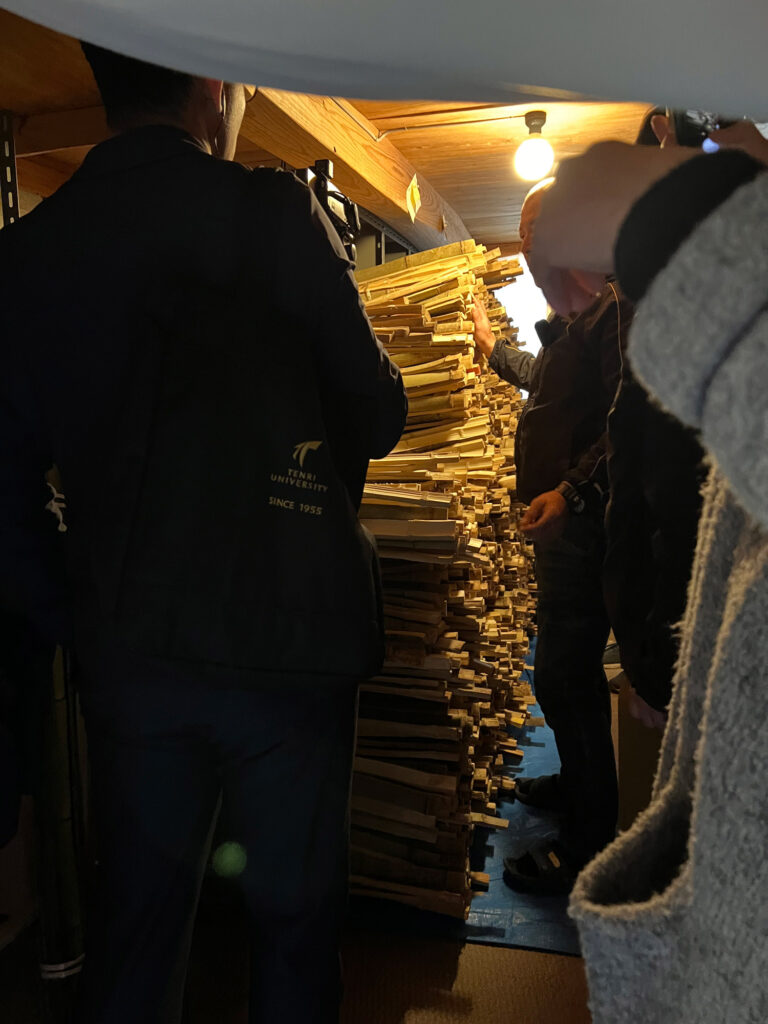
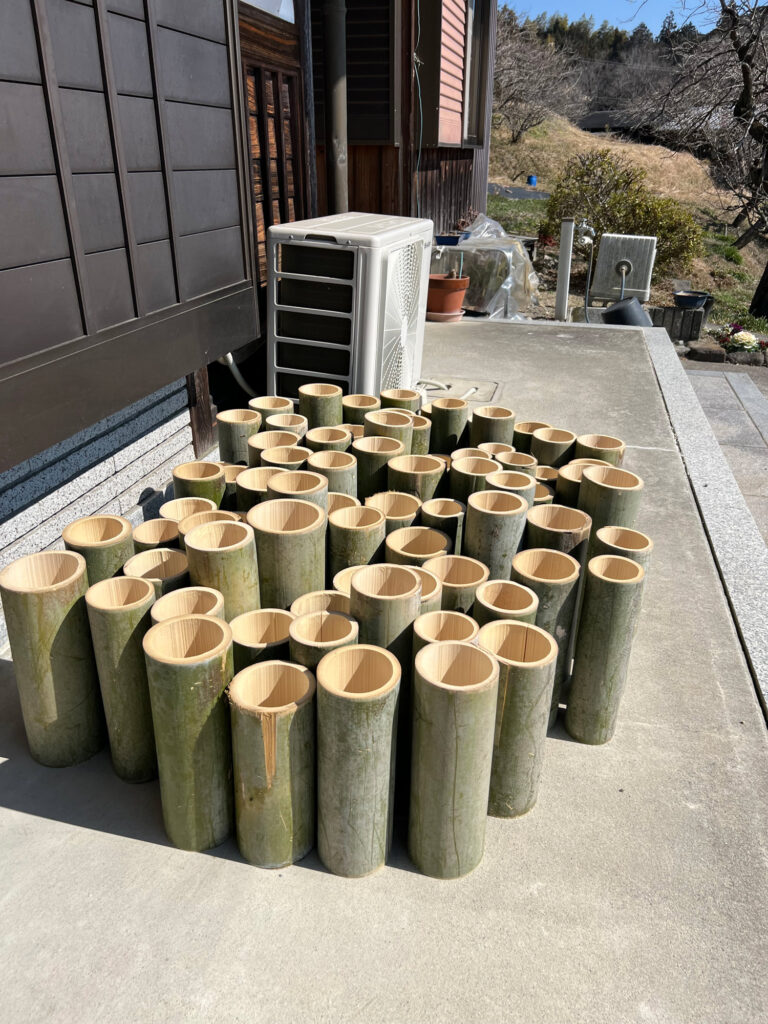
On the fourth day of the tour, participants also visited a Shinai craftsman in Iga, where they had the opportunity to observe firsthand how Shinai are actually made.
Kendo Equipment Came into Use Around the Middle of the Edo Period
When considering the development of Shinai Uchikomi Keiko, one essential element is Kendo equipment.
So, when did Kendo equipment first appear?
Interestingly, the exact answer is still unclear.
It was traditionally believed that Naganuma Shirozaemon Kunisato of Jikishinkage-ryu invented protective equipment around 1711–1716, during the middle of the Edo period. However, evidence suggests that some forms of protective equipment were already in use by that time.
The equipment used also varied from school to school. Some schools practiced wearing only Kote, while others used both Men and Kote, and there were various other combinations.
By the Bakumatsu period, as matches between different schools became increasingly common, protective equipment resembling the Kendo equipment used today gradually became standardized.
For example, if practitioners from a school that did not use a Do faced another school in a match and were struck on the torso, they naturally had a reason to begin wearing one. Through this process, the four main components of modern Kendo equipment—Kote, Men, Do, and Tare—gradually came together.
How Kendo Equipment Has Changed with the Times
Although the basic form of Kendo equipment is said to have remained largely unchanged since the Edo period, certain details evolved in response to the techniques that were popular at the time. For example, during periods when Tsuki techniques were widely practiced, Men were equipped with a larger Tsuki-dare.
During the lecture, we were shown a photograph of Takasugi Shinsaku, a prominent samurai of the late Edo period, wearing Kendo equipment. His Men had a noticeably larger Tsuki-dare than those commonly seen today.
Historical materials from the Bakumatsu period also show examples in which the angle of the Men-gane was slightly sharper than it is today.
These features suggest that techniques targeting the face were practiced during that period.
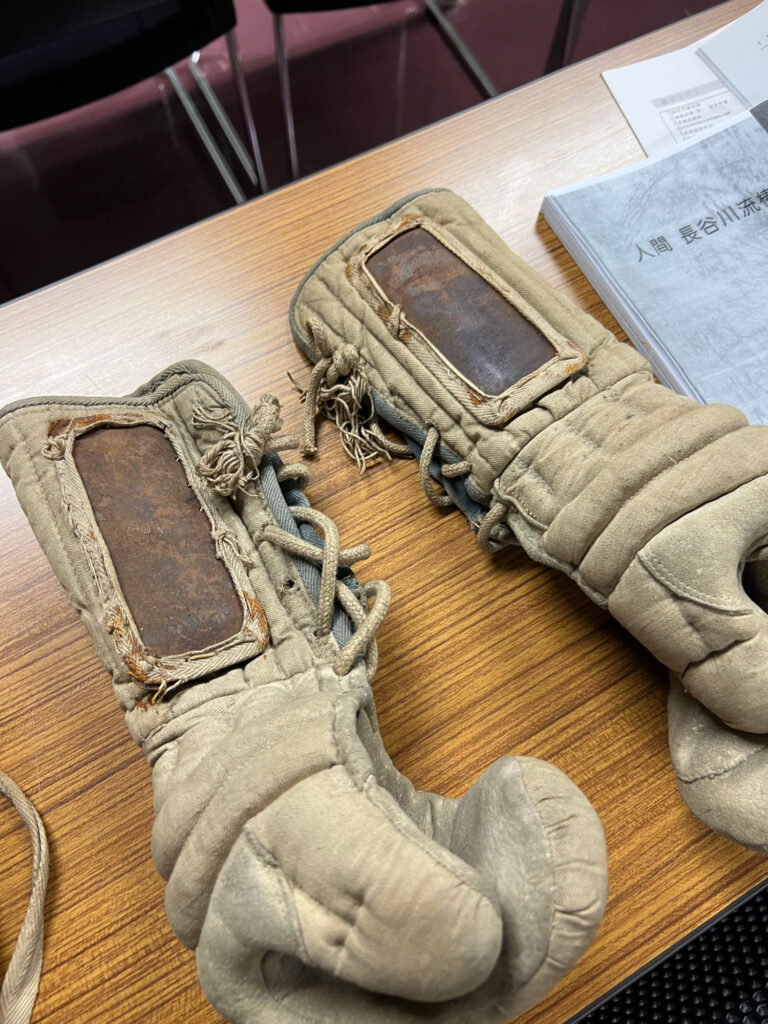
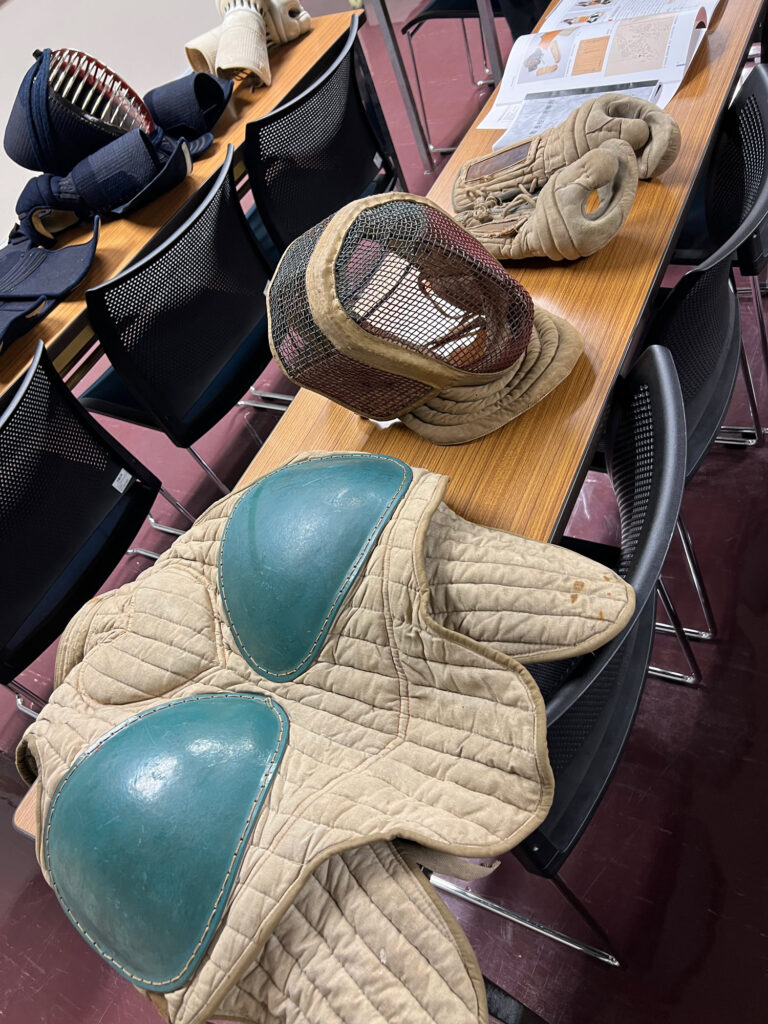
Also displayed in the classroom was protective equipment used for Shinai Kyogi, a competitive sport introduced after World War II as an alternative to Kendo during the period when Kendo was prohibited.
Its design looks closer to fencing equipment than to modern Kendo equipment. Kendo today is often described as a Budo, but after the war, it also went through a period in which it was reintroduced in the form of a sport. Seeing the actual equipment used at the time made this part of Kendo’s postwar history particularly tangible.
Day 1, Afternoon: Hiromasa Umezawa, Second-Generation Kendo Equipment Craftsman of the Takeyaryu Umezawa School
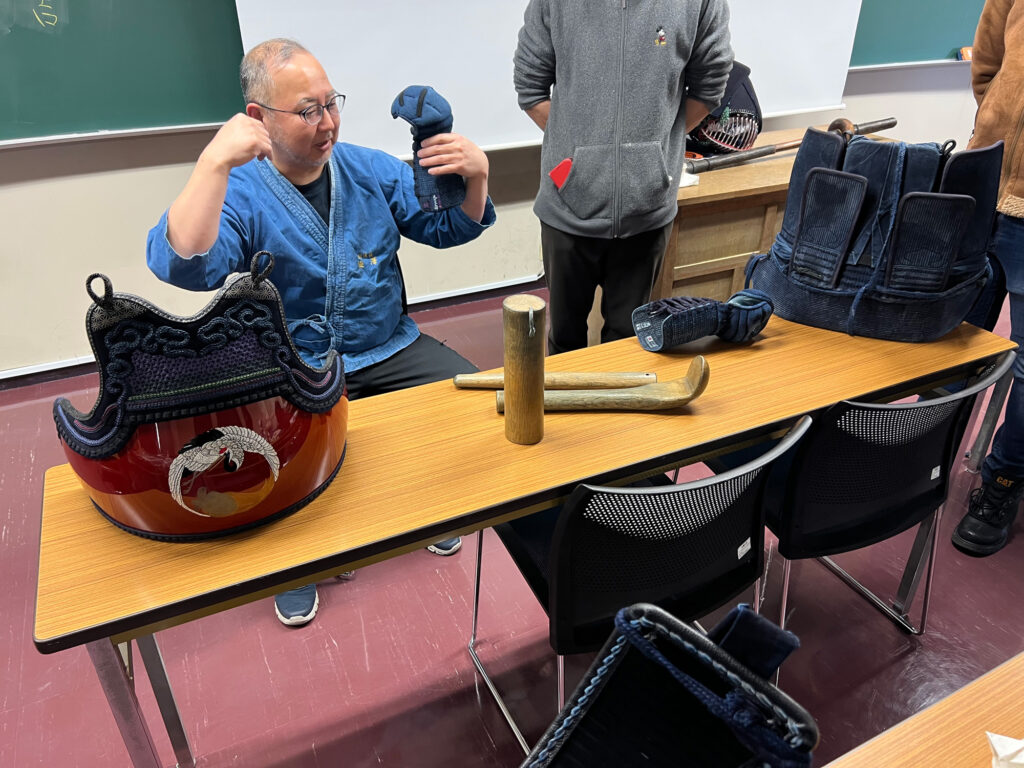
During the lecture, a selection of Kendo equipment was displayed at the front of the classroom. The equipment had been brought by Kendo equipment craftsman Hiromasa Umezawa, who runs his workshop in Kumagaya, Saitama Prefecture. He personally crafts every component of Kendo equipment, from Men and Kote to Do and Tare.
On the afternoon of the first day, a Q&A session on Kendo equipment was held with Mr. Umezawa. He carefully answered each of the participants’ specific questions about their equipment.
One of the most memorable parts of the session was seeing Mr. Umezawa take the Kendo equipment that participants actually use in their daily practice, examine its condition on the spot, and carry out maintenance while explaining what he was doing.
The world of Kendo equipment craftsmanship also has distinct schools and lineages through which skills and knowledge have been passed down. Mr. Umezawa belongs to the lineage of the Takeyaryu school.
Takeyaryu was founded by Genjiro Takemoto. The school is also known for its connection with Sasaburo Takano, a legendary swordsman often described as the father of modern Kendo, who was involved in the improvement and development of Kendo equipment while advising Benzo Takemoto, the second-generation master of Takeyaryu.
Mr. Umezawa’s father studied under Kenshin Suzuki, who belonged to this lineage, and inherited both its craftsmanship and philosophy. Rather than specializing in a single component such as Kote or Men, he developed the comprehensive skills required to craft an entire set of Kendo equipment—Men, Kote, Do, and Tare—from start to finish.
In recognition of his exceptional craftsmanship, he received the Award for Outstandingly Skilled Workers, commonly known in Japan as the “Contemporary Master Craftsman” award, from the Ministry of Health, Labour and Welfare. He was also awarded the Medal with Yellow Ribbon by the Japanese government.
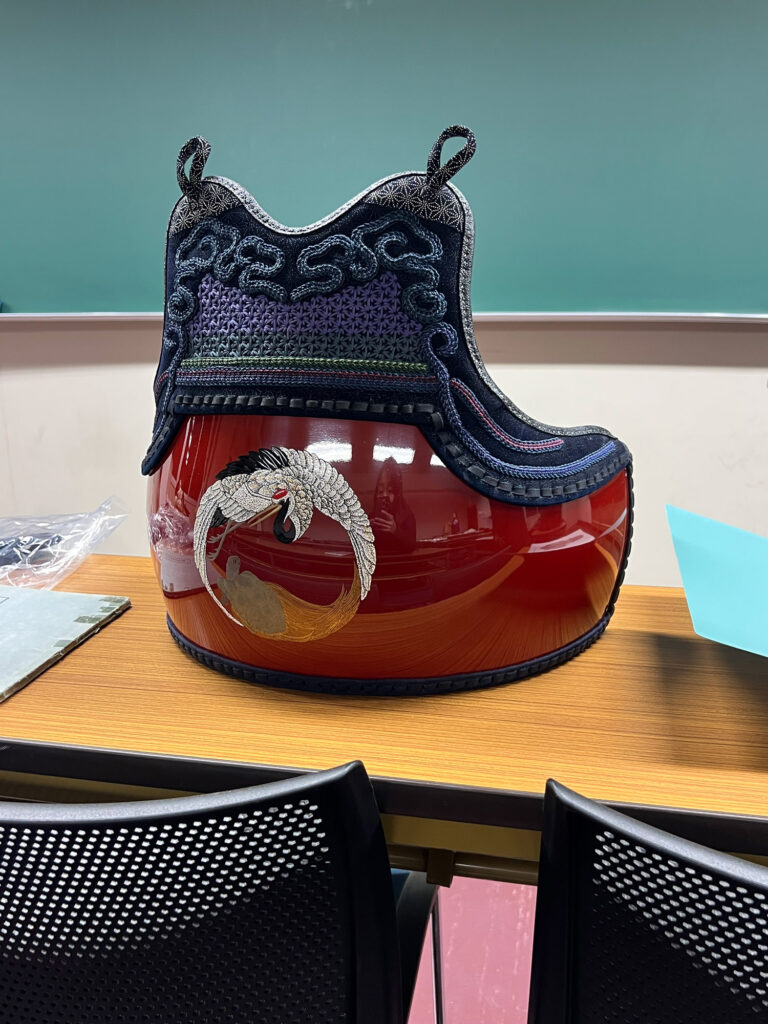
These teachings continue to be carefully preserved and have been passed down to Hiromasa Umezawa, the second-generation master of the Takeyaryu Umezawa school.
When creating Kendo equipment, Mr. Umezawa begins by carefully listening to each practitioner—asking “What kind of Kendo do you want to practice?” and “What kind of Kendoka do you want to become?” Based on these conversations, he creates the equipment that truly meets the individual practitioner’s needs.
Closing Day 1: Experiencing Jikishinkage-ryu Hojo Kata and Jigeiko
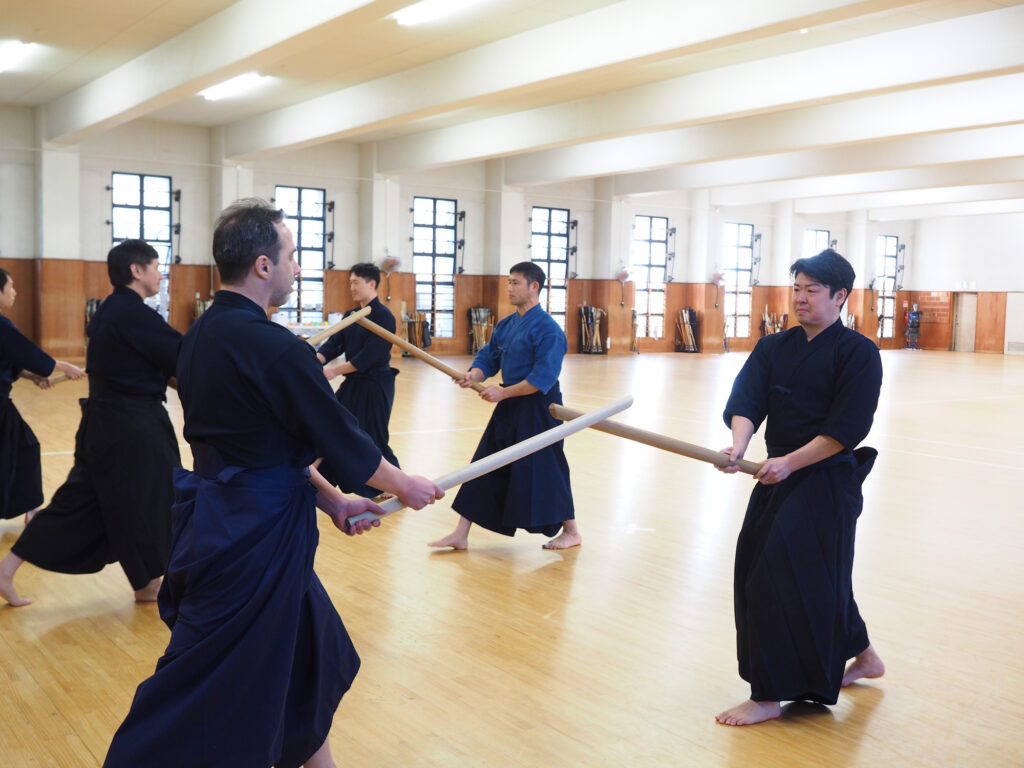
The first day concluded with Keiko. Participants first spent approximately one hour experiencing Hojo Kata of Jikishinkage-ryu, followed by Jigeiko together with members of the Tenri University Kendo Club.
The Kata of traditional schools of swordsmanship differ significantly from Nippon Kendo Kata, and the differences in movement and breathing seemed to offer participants a fresh and unfamiliar experience.
Through the practice of Hojo Kata, participants had an opportunity to experience the physical principles and technical system that form part of the roots of modern Kendo.
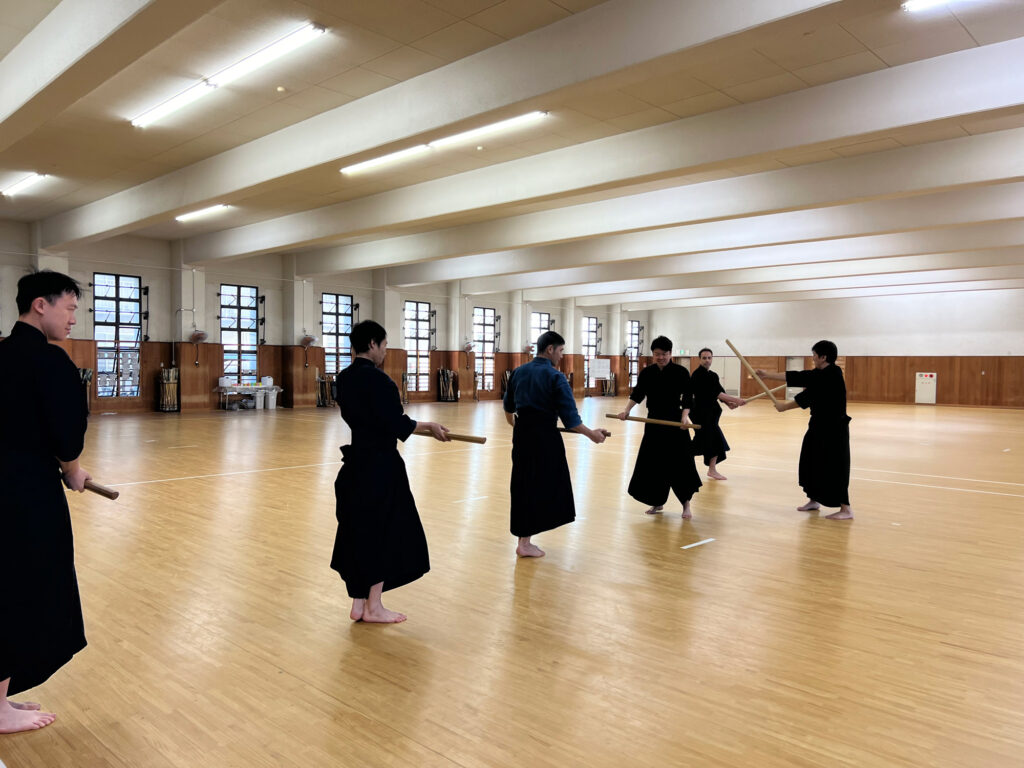
By the time Keiko came to an end, it was already completely dark outside.
The knowledge gained through the morning lectures became more tangible through the Q&A session with Kendo equipment craftsman Mr. Umezawa and the opportunity to see and handle actual Shinai and Kendo equipment. Participants then experienced Kata from a traditional school of swordsmanship before concluding the day with Keiko.
It was an intensive first day in which learning and practice were closely interconnected, allowing participants not only to acquire knowledge, but also to see, touch, experience, and ultimately put that knowledge into practice.
Leave a Comment